
Mastering Password Security: Your Essential Guide
As passwords remain the cornerstone of online security, understanding how to create and manage strong passwords is more critical than ever. Passwords protect your sensitive data from cyber threats, and making informed decisions about password practices significantly enhances your cybersecurity. This guide focuses on effective techniques for crafting robust passwords while managing risks associated with weak password policies. Grasping the essential aspects of password management empowers individuals and organizations to secure their digital identities confidently.
Understanding Password Vulnerabilities
Identifying common vulnerabilities is key to enhancing your password security. A significant risk arises from password reuse, where individuals employ the same password across multiple platforms, making it easy for cybercriminals to exploit breaches from one platform to access others. Recognize that even strong passwords can be undermined if used repeatedly. It’s imperative to adopt unique passwords for each account to minimize exposure during data breaches.
Weak passwords, lacking sufficient length and complexity, present another vulnerability. Such passwords are prime targets for attacks like brute force and dictionary exploits. Implementing strong password creation strategies is vital. Understanding how attackers navigate these weaknesses will guide you in reinforcing your defenses against unauthorized access.
Crafting Strong Passwords
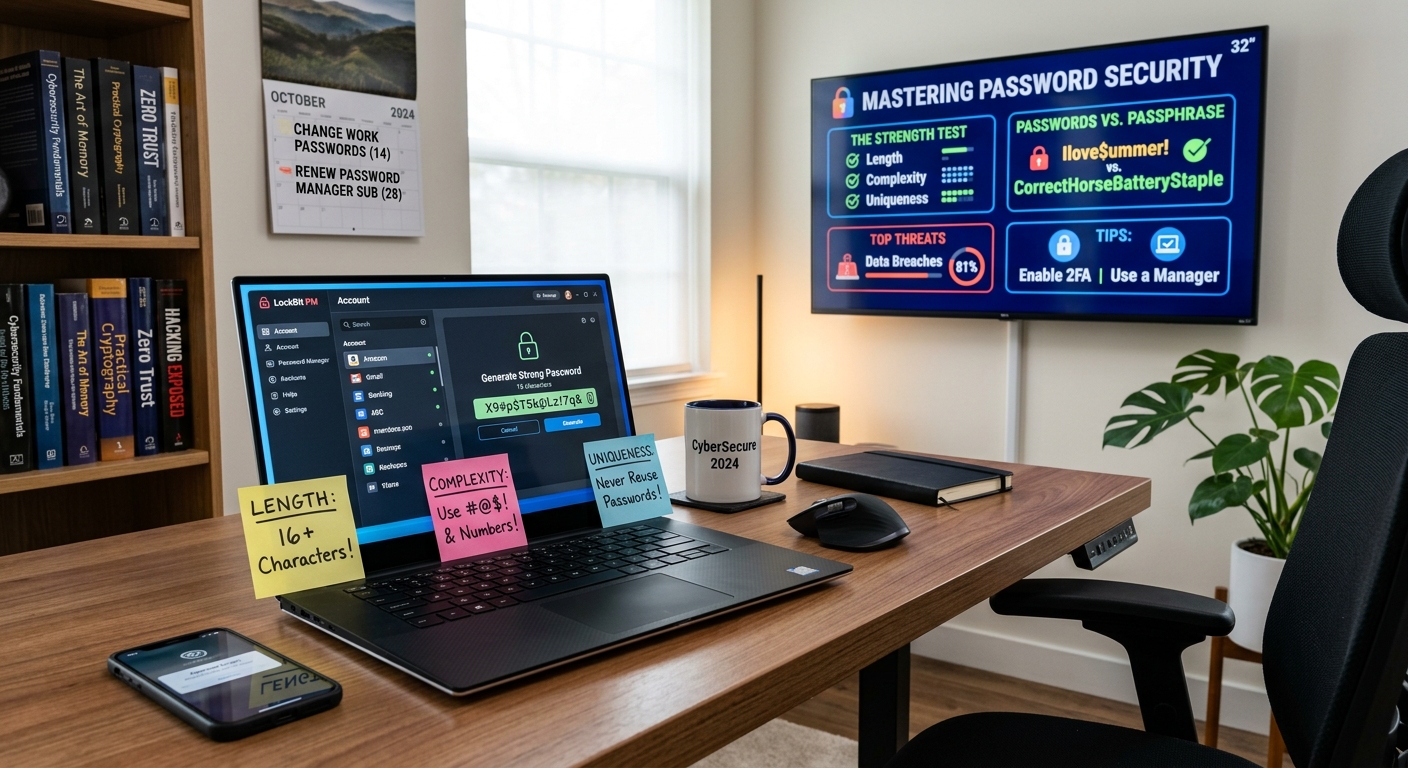
Understanding the core traits of strong passwords is essential for protecting your accounts. The most critical elements include length, complexity, and uniqueness. Length plays a pivotal role; guidelines now advocate for passwords or passphrases with 12 to 16 characters or more. The extended length exponentially increases the guessing complexity for brute-force attacks, making it a foundational aspect of password strength.
While complexity traditionally emphasized a mix of uppercase letters, lowercase letters, numbers, and special characters, modern guidelines shift focus toward length and unpredictability. This change acknowledges that overly complicated passwords can still be predictable. Therefore, it’s essential to combine these practices creatively, inviting unorthodox combinations or phrases that inspire memorability while maintaining security.
Utilizing Passphrases
Passphrases are an effective alternative to traditional passwords. Composed of longer sequences of words or meaningful phrases, they encapsulate the key qualities of robust passwords—length, complexity, and uniqueness. Crafting a passphrase using personal interests or significant quotes can make it more memorable without compromising security. For example, “ToBeOrNotToBe” as a passphrase blends memorability with complexity.
Moreover, leveraging password managers becomes central in managing unique passphrases for different accounts, enhancing both security and convenience. Password managers can generate complex passphrases and store them securely, allowing users to focus on remembering just one master password.
Adopting Multi-Factor Authentication (MFA)
Incorporating Multi-Factor Authentication (MFA) into your security protocol provides an essential layer of protection beyond passwords alone. MFA requires users to present additional verification factors—like a phone verification code or fingerprint—significantly reducing the risk of unauthorized access, in case a password is compromised. Utilizing MFA is increasingly recognized as a best practice in cybersecurity for individuals and organizations alike.
This method not only helps mitigate risks associated with cyber threats but also encourages a proactive approach to securing sensitive data. Understanding the various MFA options available and aligning them with your security needs can bolster your defenses further, making unauthorized access considerably more difficult.
Implementing Secure Password Management Strategies
Managing passwords effectively is crucial as the number of online accounts increases. Relying solely on memory is impractical and leads to risky behaviors, such as password reuse. Harnessing password management tools can simplify this responsibility, as they store and generate strong, unique passwords for each account. By using an encrypted storage approach, they alleviate the burden of remembering numerous complex passwords while enhancing overall security.
Encouraging the use of these tools within organizations can lead to advanced password hygiene practices. Providing employees with password managers not only circumvents common management pitfalls but also promotes compliance with robust security policies by reducing the likelihood of password reuse and weak password practices.
Secure Password Storage and Transmission
Securely storing passwords on servers entails using advanced cryptographic methods rather than simple encryption methods. Hashing is a fundamental technique where passwords are converted into non-reversible strings, ensuring that plain text cannot be easily accessed. Adding a unique salt to each password strengthens this process, creating distinct hashes and thwarting attackers using precomputed tables to crack passwords.
It’s equally important to ensure secure transmission of these passwords. Utilizing protocols like Transport Layer Security (TLS) encrypts data in transit, protecting sensitive credentials from interception during communication between clients and servers. Maintaining these standards helps defend against common network-based attacks.
Avoiding Common Mistakes in Password Practices
Recognizing and avoiding common password-related mistakes can significantly bolster your security. One major error is reusing passwords across multiple accounts, which exposes you to credential stuffing and other exploitation tactics. Users tend to memorize a single, easy-to-remember password, compromising security by making it easier for attackers to gain access across accounts.
Another frequent misstep is creating simple or predictable passwords that can be easily guessed. Passwords like “password” or “123456” are far too common. It’s vital to choose passwords or passphrases that are unique and complex, steering clear of easily accessible personal information. Ensuring ongoing education about these risks and best practices encourages vigilance among users.
Continuous Learning and Adjustment of Security Policies
Staying current on password security trends and educating users about their importance fosters a culture of awareness and proactive engagement. Employees should be well-informed about the latest threats and vulnerabilities associated with password use. Organizations must adapt best practices as standards evolve while ensuring continuous practice improvements through training and robust password policies.
Encouraging team participation in cybersecurity awareness initiatives can reinforce individual commitment to enhancing password hygiene. Establishing regular training sessions ensures that everyone is aware of both emerging threats and effective prevention strategies. Additionally, periodic assessments of password policies can provide insights into their effectiveness and areas needing improvement.
Future Trends and Innovations in Password Security
The landscape of password security is pivoting towards more sophisticated, user-friendly authentication methods. As organizations and individuals become familiar with concepts like passwordless authentication, the reliance on passwords may diminish. Innovations such as biometric verification and federated identity systems offer promising alternatives that could enhance both usability and security.
In tandem with these advancements, understanding and implementing secure cryptographic protocols remains essential. Strategies like adopting modern hashing algorithms offer robust backend protections that bolster stored credentials against evolving threats. Embracing these changes equips users and organizations to navigate the ever-evolving cybersecurity landscape more effectively.
Resources for Strengthening Password Security
Access to the right tools and resources significantly enhances your password security efforts. Utilizing password managers can elevate security practices by creating, storing, and managing complex passwords efficiently. These tools typically offer alerts regarding weak or reused passwords, thus encouraging timely updates.
Additionally, engaging with communities and resources focused on cybersecurity can provide critical insights into emerging standards and best practices. Participating in forums, attending workshops, and exploring toolkits designed to enhance password security further empower users to safeguard their online identities effectively.
By implementing the outlined strategies and recognizing the importance of continuous learning within password management, individuals and organizations can create a safer digital environment. The complexities of password security demand attention, but with informed and proactive measures, it is possible to achieve robust protection against the evolving threat landscape.
The content is provided by Harper Eastwood, financialpulsenow